




Table of contents
Incentive compensation management (ICM) is the process of designing, administering, and automating performance-based compensation programs — primarily sales commissions, bonuses, and other variable pay tied to measurable outcomes.
For many companies, ICM starts in a spreadsheet. For most, it eventually needs something more: a purpose-built platform that can handle plan complexity, reduce errors, give reps real-time visibility into their earnings, and give finance and RevOps the controls they need to close periods cleanly.
This guide explains what ICM is, why it matters, how it differs from related categories, and what to look for in ICM software.
What is incentive compensation management?
Incentive compensation management (ICM) encompasses everything involved in running a performance-based pay program:
- Plan design: Defining the structure of commission and bonus plans — rates, tiers, accelerators, SPIFFs, thresholds, and rules
- Data integration: Pulling sales data from CRM, ERP, and other systems of record to drive calculations
- Calculation: Running accurate, auditable commission calculations at scale
- Period management: Validating, adjusting, and closing compensation periods (monthly or quarterly)
- Statements and payouts: Generating rep-facing commission statements and preparing data for payroll
- Dispute management: Handling rep queries and corrections with a tracked audit trail
- Reporting and analytics: Giving managers and leadership visibility into comp costs, attainment, and plan effectiveness
In organizations without dedicated ICM tooling, most of these steps happen in spreadsheets — a manual, error-prone, and opaque process that creates friction for finance, RevOps, and sales reps alike.

Why Do Companies Move from Spreadsheets to ICM Software?
Incentive compensation is one of the largest variable cost lines in any sales-driven organization. A mid-market SaaS company with 50 sales reps might pay $3–5M in variable compensation annually. Getting the mechanics wrong — even by small percentages — has real financial impact.
But ICM isn’t just a finance problem. It’s a performance problem.
- Motivation and transparency: Reps who don’t understand their compensation — or who can’t trust it — disengage. Research consistently shows that commission visibility correlates directly with rep motivation and retention.
- Plan effectiveness: Without ICM analytics, it’s nearly impossible to know if your comp plans are driving the behaviors you want. Are accelerators activating? Are reps sandbagging at 100% of quota? ICM data answers these questions.
- Time savings: Manual commission processes are a significant RevOps and finance burden. The average team running commissions in spreadsheets spends 3–5 business days per period on calculation, review, correction, and statement generation. ICM platforms automate most of that.
- Compliance: For companies subject to ASC 606, accurate tracking of commission accruals and amortization is a financial reporting requirement, not an option.
What’s the Difference Between ICM and SPM?
Incentive Compensation Management (ICM) focuses specifically on the administration of variable compensation — calculating commissions, managing disputes, generating statements, and closing periods.
Sales Performance Management (SPM) is a broader category that includes ICM but extends to territory and quota planning, sales forecasting, coaching, and workforce planning. SPM platforms like Varicent or Xactly Incent cover the full scope of sales performance administration.
For most mid-market companies, a purpose-built ICM platform covers everything they need. SPM makes more sense for enterprise organizations with large, complex sales operations and dedicated compensation analysts.
How Does the ICM Process Work?
A typical ICM cycle runs monthly or quarterly and moves through six stages:
1. Plan design and distribution
Compensation plans are built or updated, distributed to reps, and acknowledged — ideally with digital sign-off. Modern ICM platforms handle plan versioning and distribution automatically.
2. Data ingestion
Sales data flows from the CRM (Salesforce, HubSpot, Pipedrive) into the ICM platform — deals closed, deal values, rep attribution, and any other variables that drive commission calculations.
3. Calculation
The platform applies rates, tiers, thresholds, overrides, and adjustments to produce a commission figure for each rep for the period.
4. Review and validation
Managers and RevOps review calculations, apply adjustments, resolve open disputes, and approve before the period closes.
5. Period close
The period is formally closed. Commission statements are distributed to reps. Final payout figures are sent to payroll.
6. Reporting
Leadership and finance receive commission cost summaries, attainment breakdowns, and plan effectiveness analytics.
What Features Matter Most in ICM Software?
CRM integration
Your ICM platform must connect natively to your CRM and pull deal data reliably. Platforms that rely on manual CSV exports or fragile middleware create data quality problems that cascade into calculation errors.
Plan flexibility
Can the platform handle your actual plan structure? Most mid-market tools handle tiered plans, OTE-based structures, and standard accelerators. Highly customized structures — non-standard SPIFFs, multi-dimensional tiers, complex team attribution — may require more flexibility. Remuner no-code platform has the ability to handle all the comp plans you can imagine.
Rep-facing transparency
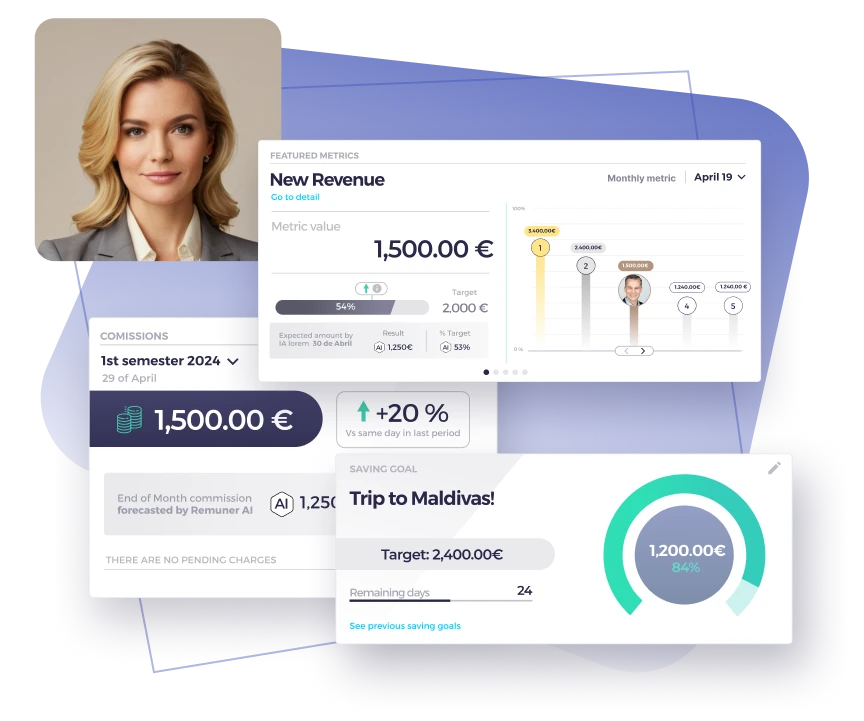
Can reps see their commission in real time, not just at period end? This is one of the highest-impact features for motivation and retention. The best platforms give reps a live dashboard showing current earnings, attainment progress, and projected commission based on pipeline.
Period close workflow
How does the platform manage the close process? Can managers apply adjustments with a full audit trail? Is there a formal approval step before statements are released to reps? Take control of the validation and approval process for every period closing.
Dispute management
A structured claims workflow — reps submit a dispute, managers review, the decision is recorded — replaces the email chains that characterize manual commission processes.
Reporting and analytics
Can you see attainment distribution across your team? Commission cost as a percentage of revenue? Plan effectiveness metrics like accelerator activation rates? Good ICM reporting turns compensation data into strategic insight.
ASC 606 support
If you’re a software or SaaS company, you may need to capitalize and amortize commission costs under ASC 606. Check whether the platform supports this reporting requirement natively.
ICM Implementation Best Practices
1. Simplify before automating
The most common ICM mistake is automating a plan that’s already too complex. Before deploying ICM software, audit your comp plans and eliminate unnecessary complexity. Plans that require elaborate workarounds to calculate usually have design problems that should be fixed upstream.
2. Get rep buy-in from the start.
ICM projects fail when reps feel like something is being done to them, not for them. Involve reps in testing the platform before go-live. Make transparency a design priority, not an afterthought.
3. Start with a clean data model.
ICM platforms are only as accurate as the CRM data that feeds them. Before implementation, audit your CRM for missing fields, duplicate records, and inconsistent attribution — fixing these upstream prevents downstream calculation errors.
4. Measure plan effectiveness, not just cost.
ICM analytics should go beyond “how much did we pay?” to “did this plan drive the behavior we wanted?” Attainment distribution, accelerator activation rates, and rep retention by attainment tier are all leading indicators of plan health.
ICM as an operational area for RevOps
Incentive compensation management is one of the highest-leverage operational areas for RevOps and finance teams. Getting it right — accurate calculations, transparent rep experience, fast period close, and real analytics — directly impacts both revenue performance and payroll efficiency.
For mid-market companies, the move from spreadsheets to a purpose-built ICM platform typically pays for itself within one to two quarters through time savings alone. The motivation and retention benefits compound over time.
Remuner is built specifically for this: an ICM platform that automates the full compensation lifecycle, gives reps Remu AI, their Sales Comp Assistan, for real-time visibility, and gives RevOps the controls and analytics they need — without enterprise-grade complexity or cost.
Book a demo to see Remuner’s in action.