



Xactly Incent was built in 2005, in the era of on-premise software and manual spreadsheet configuration, long before AI-assisted plan design or cloud-native architecture existed. As sales teams scale and RevOps leaders demand faster, more flexible tooling, many companies are actively looking for Xactly alternatives that don’t come with legacy complexity — or legacy-era price tags.
Whether you’re frustrated with Xactly’s steep configuration requirements, slow reporting, or the expensive professional services needed to keep things running, you’re not alone. G2 and Capterra reviewers consistently flag the same pain points: plans that are difficult to maintain when hierarchies change, a confusing UI, and limited historical data reporting — symptoms of a platform architected for a different technological era. Xactly’s typical implementation runs 3–6 months and most plan changes require paid PS, making it difficult to iterate quickly as your business evolves.
This guide breaks down the 10 best Xactly alternatives in 2026 — what each platform does well, who it’s best for, and why Remuner comes out ahead as the most complete, AI-native option.
Why Teams Look for Xactly Alternatives
1. Built for a pre-AI, pre-cloud era. Xactly’s architecture predates modern AI tooling by nearly two decades. Plan design, scenario modeling, and rep-facing Q&A all require manual work that newer, AI-native platforms now handle automatically — Xactly wasn’t built with AI in mind; it’s had capabilities layered on afterward.
2. Professional services dependency. Keeping Xactly plans up to date typically requires dedicated admins or paid PS engagements — adding cost and slowing down every plan iteration.
3. Performance and UX issues. Users frequently report slow dashboard loading, a confusing interface, and limited visualization capabilities — common complaints about software built before modern UX expectations existed.
4. Reporting limitations. Working with historical commission data, downloading quota credits, and customizing report outputs are recurring frustrations.
5. Long implementation timelines and steep cost. Most Xactly Incent implementations run 3–6 months, with ongoing PS required for major plan changes. Pricing starts at ~$60/user/month before implementation, training, and support — for teams under 300 reps, the ROI is difficult to justify.
“I’ve implemented a dozen tools… Remuner was hands down the best onboarding I’ve ever had.” — Krystian Kuta, Sales Operations Lead at Singu (G2)
The 10 Best Xactly Alternatives in 2026
1. Remuner — the most complete Xactly alternative
Best for: Mid-market and scaling sales teams that want Xactly-level plan sophistication without the legacy complexity, cost, or multi-month implementation.
Remuner is a modern, AI-native ICM built to automate every step of the commission process — from plan design and period closing to real-time rep visibility. Where Xactly requires dedicated admin effort to maintain plans on architecture that predates modern automation, Remuner lets RevOps and finance teams run lean, because AI does the heavy lifting from day one rather than being bolted on top of a 20-year-old system.
What sets Remuner apart:
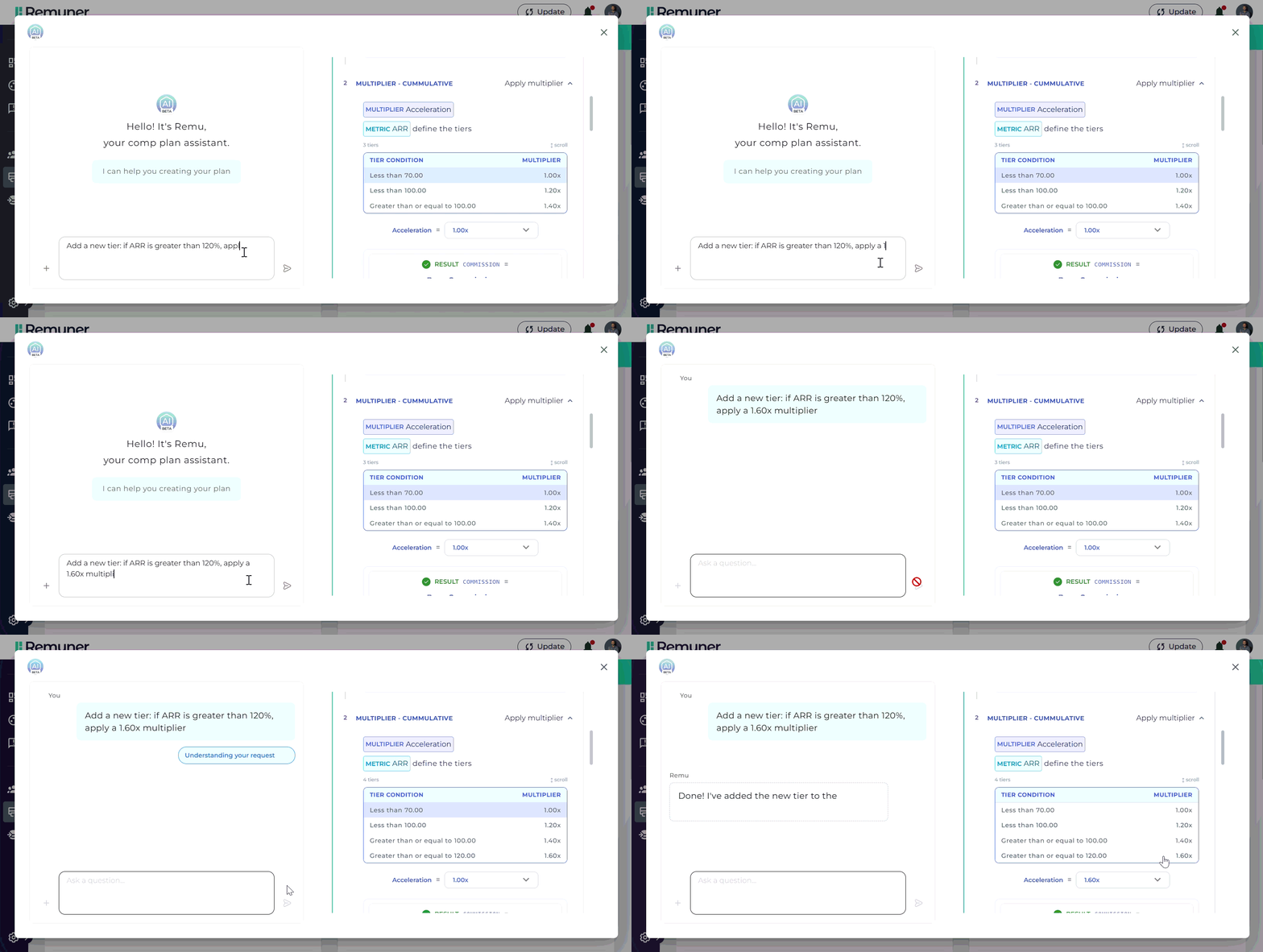
- Remu AI designs comp plans in minutes — tiers, multipliers, accelerators, kickers — no spreadsheets required. Reps get instant answers to “How much am I making this quarter?” Finance runs “what if” simulations before any plan change goes live.
- No PS required for plan building or plan changes — Remuner was designed so RevOps and Finance can self-serve from day one, unlike Xactly’s PS-dependent model.
- Native CRM integrations with Salesforce, HubSpot, and others — no middleware required.
- Go-live in under 4 weeks, versus Xactly’s typical 3–6 month enterprise implementation.
“The support is outstanding: the team responds quickly and engages strategically.” — Esteban Mellado, Sales Operations Analyst at Fracttal (G2)
Remuner’s support doesn’t stop at go-live, either. Mention Me’s RevOps team called out the hands-on help they get building plans on tight deadlines:
“The team at Remuner have been amazing. I don’t think a lot of other providers can provide that kind of level of support, particularly in a time where we’re moving so quickly.” — Antonio Worner, RevOps Lead at Mention Me
🏆 G2 High Performer · Best Support · Momentum Leader
Book a demo and see how your comp plans would look on Remuner’s platform.
2. Everstage
Best for: RevOps-led teams that want strong analytics and a polished rep experience.
Everstage is an AI-first revenue transformation platform built for RevOps, Finance, and Sales leaders who need both compensation management and broader sales performance visibility. Strong rep-facing experience, real-time commission tracking, and transparent payout dashboards. A comprehensive benchmarking library helps teams design competitive comp plans.
Strengths: Rep gamification, strong analytics, real-time earnings forecasts.
Limitations: Heavier to implement than mid-market tools; better suited to mature RevOps functions; plan building still leans on the team rather than an AI assistant. See the full Remuner vs. Everstage comparison →
3. QuotaPath
Best for: SMB and early-to-mid-market teams that want self-serve onboarding.
QuotaPath gets teams live in days, not months. No minimum user limits, an AI-powered plan builder, and a clean rep-facing dashboard make it a strong Xactly alternative for teams that don’t need enterprise-grade complexity.
Strengths: Very fast onboarding, transparent pricing, excellent rep transparency tools.
Limitations: Complex enterprise comp plans may outgrow the platform’s flexibility. See the full Remuner vs. QuotaPath comparison →
4. CaptivateIQ
Best for: Finance teams that want a spreadsheet-like formula engine.
CaptivateIQ’s spreadsheet-inspired interface is approachable for Excel-comfortable finance teams. Highly flexible formula engine and has expanded into sales planning alongside compensation — a newer platform than Xactly, but it still leans on manual formula-building rather than AI-assisted design.
Strengths: Flexible formula engine, excellent customer support (94% satisfaction on G2).
Limitations: Implementation and maintenance often require paid PS ($10K–$30K+ implementation fees). Annual contracts start around $7,200/user. See our CaptivateIQ alternatives guide →
5. Salesforce Spiff
Best for: Teams fully standardized on Salesforce CRM.
Acquired by Salesforce in 2024, Spiff is embedded in the Salesforce ecosystem. Commissions appear inside the CRM alongside deal records — the most seamless experience for SF-native teams.
Strengths: Native Salesforce integration, single-platform experience.
Limitations: Limited value outside Salesforce; some users note pricing and roadmap uncertainty post-acquisition.
6. Performio
Best for: Finance-led teams in regulated industries with audit requirements.
Built with finance and compensation teams as the primary user. Strong audit trails, SOX compliance, multi-currency, and multi-region plan handling.
Strengths: Audit and compliance features, handles complex regulated-industry plans.
Limitations: Less polished rep-facing experience; can feel heavy for smaller teams.
7. Varicent
Best for: Large enterprise needing a full SPM platform.
Varicent is a full-scale Sales Performance Management platform covering ICM, territory and quota management, and revenue intelligence. Built for very large, complex organizations.
Strengths: Enterprise-grade breadth, strong territory and quota modules.
Limitations: 3–6 month implementation, enterprise pricing, not suited for under ~500 reps.
8. Anaplan
Best for: Enterprises using comp as part of a broader FP&A platform.
Primarily a connected planning platform for budgeting, forecasting, and workforce planning — compensation is one module among many. If your finance team is already on Anaplan and wants to consolidate, it can work; as a standalone ICM, it’s overbuilt for most use cases.
Strengths: Part of a broader planning ecosystem; strong for cross-functional FP&A teams.
Limitations: Not purpose-built for ICM; very complex and expensive; limited rep experience.
9. SAP Commissions
Best for: Large enterprises already running SAP ERP.
SAP Commissions (formerly CallidusCloud) handles multi-country, high-volume commission processing with strong compliance features. The natural choice for SAP-native enterprises — poor fit outside that ecosystem, and like Xactly, an older platform not built with AI-assisted plan design in mind.
Strengths: Deep SAP integration, enterprise scale, strong compliance.
Limitations: Very high cost and complexity; requires SAP ecosystem to justify.
10. Iconixx
Best for: Mid-market companies with moderately complex standard comp plans.
Iconixx handles quota attainment, tiered accelerators, SPIFs, and MBO plans without the enterprise price tag. A configurable rules engine and decent reporting make it a solid mid-market option, though it lags behind newer platforms on AI features and rep experience.
Strengths: Good mid-market fit, configurable, reasonable cost.
Limitations: Less AI-driven than newer platforms; basic rep visibility.
Xactly Alternatives: Feature Comparison
How Remuner and the top Xactly alternatives stack up on the features that actually decide a switch.
Feature data compiled from each vendor’s public product pages and independent vendor comparisons as of August 2026.
Why Switch From Xactly — and What You Need to Do
1. Own the plan design internally. You don’t need a consultant on retainer — Remu AI builds and models plans based on your go-to-market motion, so RevOps or Finance can own it directly.
2. Let AI build the first version of your new plan. Feed Remu AI your current Xactly plan logic and let it suggest an equivalent (or improved) structure — tiers, accelerators, and kickers included — instead of rebuilding formulas by hand.
3. Migrate historical commission data. Export Xactly’s historical payout and quota-credit data before cutover so reps retain visibility into past performance, not just what happens after go-live.
4. Time the cutover to a period boundary. Switch at the start of a new quarter or comp period to avoid mid-cycle recalculation headaches.
5. Run parallel calculations for one cycle. Validate Remuner’s output against Xactly’s for a full comp period before fully decommissioning the old system.
6. Involve support early. Remuner’s team gets hands-on during onboarding — loop them in before cutover, not after something breaks.
Book a demo and see how your comp plans would look on Remuner’s platform.
Frequently Asked Questions
What is the best Xactly alternative for mid-market companies?
Remuner is the strongest alternative for mid-market teams: same plan complexity as Xactly, no PS dependency, native CRM integrations, and Remu AI for real-time rep visibility. Most teams go live in under 4 weeks.
Is Xactly Incent built on modern, AI-native technology?
No — Xactly Incent launched in 2005, before cloud-native architecture and AI-assisted tooling existed in this category. Its AI-adjacent features, like forecasting, were added later on top of that older foundation. Remuner was built AI-native from the start, with Remu AI central to how plans get designed and reps get answers, not a feature layered on afterward.
Does Remuner replace Xactly Incent?
Yes — Remuner covers the full ICM lifecycle: plan design, CRM integration, period closing, dispute management, and rep-facing commission statements. For mid-market teams, it replaces Xactly without the need for professional services.
Sources: G2, Capterra, Gartner Peer Insights, TrustRadius (August 2026)