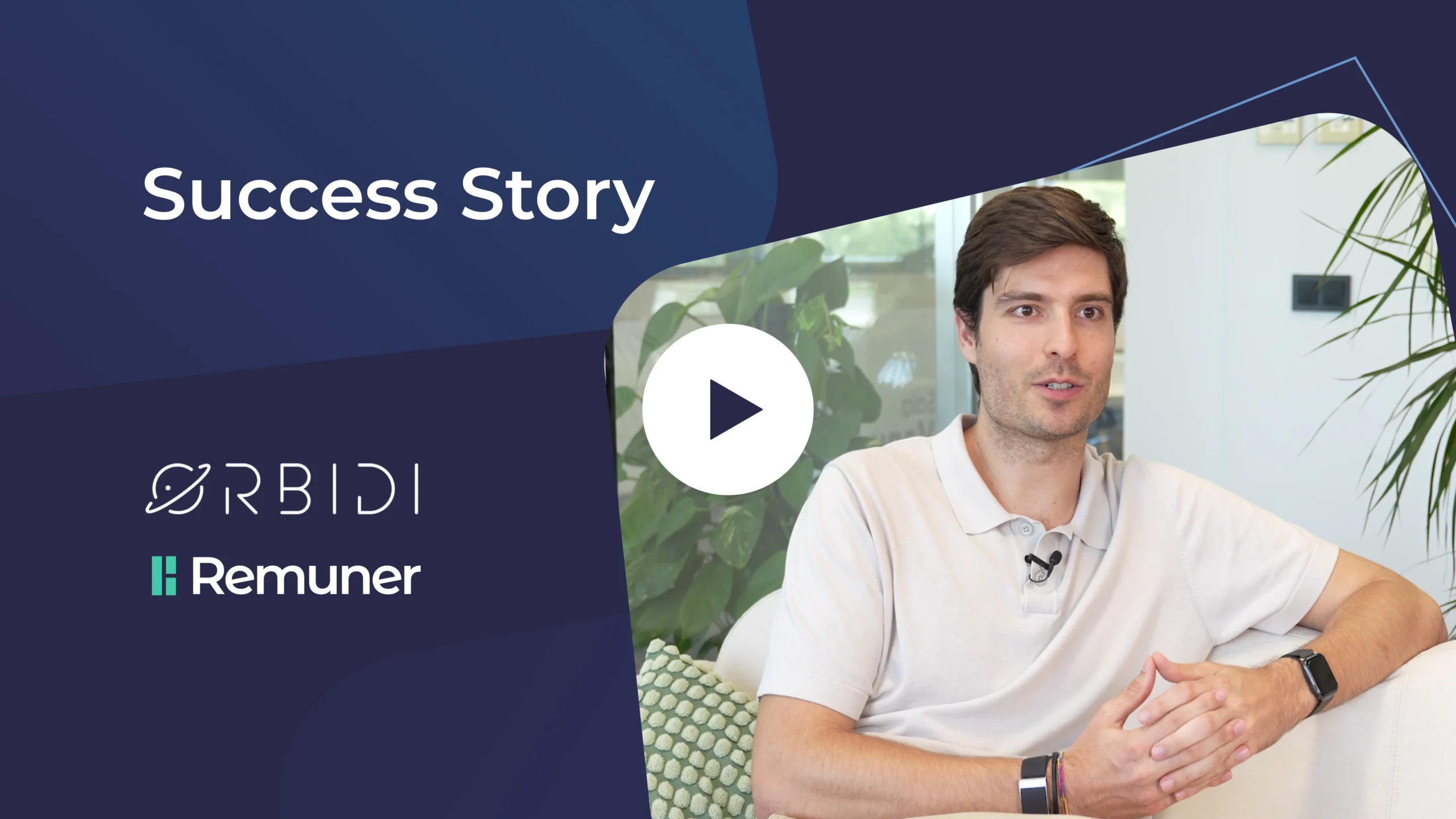





Remuner co-founder Sergio González joined Alan and Kevin on the Confessions of a Seller podcast for a candid, hour-long conversation about sales compensation, the mistakes almost every company makes, and what it really takes to build incentive plans that work. Here are the moments worth saving.
1. The gin tonic rule: if you can’t explain it after three drinks, redesign it
Sergio has a simple test for any compensation plan: “If you cannot explain your compensation plan after three gin tonics to your colleagues, then that’s not the right compensation plan.”
Complexity is the enemy of motivation. Reps who don’t understand how they’re being paid can’t adjust their behavior to match what the company actually needs. The gin tonic rule isn’t about dumbing things down — it’s about building plans clear enough that every seller can act on them. That’s not just a tooling issue—it’s a system failure. If the plan design, calculation engine, visibility, and iteration loop aren’t integrated, the organization pays a trust tax every month.
2. Money drives behavior. Full stop.
This was the episode’s running theme — and it came up in every story Sergio told. Compensation plans are not an administrative function. They are, in his words, “the most powerful — and most underrated — management tool a company has.”
If you want your team to close quality deals, incentivize quality revenue. If you want them to protect margins, make that visible in the plan. If you want them to care about customer success post-sale, give them a reason to. The comp plan tells people what the company actually values, regardless of what you say in team meetings.

3. Sergio’s own confession: the end-of-month email to Mexico
Before founding Remuner, Sergio was on the other side of a badly designed comp plan. At a previous company, commissions were paid on signed contracts — not on collected revenue. The result? On January 31st at 11pm, he was emailing prospects in Mexico offering 50% discounts, because hitting quota that month was what got him paid.
“I was making a lot of money the company was not even receiving.”
When he became sales manager, he fixed it immediately: commissions only on signed contracts where cash had cleared the bank, paid quarterly, with clawbacks if the client churned within 90 days. His team hated him for it. Then, a quarter later, something unexpected happened — AEs started joining onboarding calls, following up with clients post-signature, building relationships with Customer Success. The plan had changed what they cared about.
The lesson: What you measure in the comp plan is what you get. Not what you say in the kickoff. Not what you put in the values deck. What’s in the plan.
4. The post-its moment: transparency is trust
At Signaturit, where Sergio served as COO, one of the top AEs had covered his screen in yellow post-its — a hand-tracked running tally of his own commissions. He didn’t trust the calculations he was supposed to receive.
That image stuck with Sergio. Top performers are the ones most likely to game or question compensation systems, because they have the most at stake. When those people don’t trust what they’re being paid, you’re eroding exactly the relationship you can least afford to lose. It became one of the founding insights behind Remuner.
5. The #1 compensation mistake: misaligning the metric with the goal
The most common error Sergio sees isn’t math — it’s logic. Companies want one thing but measure another. His own “Mexico email” story is a perfect example: the goal was revenue, but the metric was signed contracts.
This shows up everywhere: rewarding new logo acquisition when you need expansion revenue, paying on calls booked when you need qualified pipeline, incentivizing volume when you’re in a profitability push.
“Put the money where your mouth is. If you want quality revenue, incentivize quality revenue.”
6. Payment frequency should match your sales cycle
One of the more tactical sections of the episode covered payout cadence. Sergio’s framework: match frequency to the rhythm of how your team actually sells.
If your sales cycle is 20 days, quarterly payouts make no sense — sellers can’t connect the commission to the deal. If your cycle is 6–9 months, monthly commissions on partial progress may require cumulative annual targets with quarterly advances and accelerators.
Two side effects to watch for: sandbagging (reps holding deals for a better period) and accelerator misuse (paying above-quota rates on deals that weren’t actually hard closes). Both are symptoms of frequency and structure being out of sync with reality.
7. Higher OTE doesn’t automatically drive higher performance
A comp plan question that came up in the final rapid-fire segment: does a higher OTE drive more performance? Sergio’s answer was a firm no — with a caveat.
“If OTE is outside of anything rational it will drive frustration instead of motivation.”
His method: calculate real sales productivity from historical data — revenue per rep per week, cut by product, channel, and geography. Back that into a quota. If your OTE sits within +/- 10–15% of what that productivity implies, you’re in the right range. If it’s 2x that number, you’ve created a plan that demoralizes rather than motivates.
8. Culture can’t save a broken comp plan
Does sales culture matter more than compensation? Sergio said no, and explained why: “A great culture on top of a great compensation plan accelerates results. But a great culture on top of a very bad compensation plan will generate nothing.”
Culture and compensation aren’t competing priorities — but when they conflict, money wins. The implication for leaders is that no amount of team-building, values alignment, or leadership presence can overcome a plan that sends the wrong signal about what the company actually rewards.
9. Most revenue problems are leadership problems
In the closing rapid-fire round, one card asked: “Most revenue problems are leadership problems — yes or no?”
Sergio answered yes, immediately. His reasoning: everything discussed in the episode — comp plan design, alignment with company goals, frequency, clarity, transparency — sits within leadership’s control. When revenue underperforms, it’s usually because something in the structure was built wrong, not because the team stopped caring.
10. RevOps is the next generation of go-to-market leadership
Looking ahead, Sergio sees RevOps becoming increasingly central — not as “the CRM admin” but as the strategic function with the only truly transversal view of the go-to-market ecosystem. As AI fragments and then reconnects outbound, inbound, and sales motions, the function that understands data, systems, and process end-to-end becomes the one that drives commercial strategy.
“The current RevOps managers are the future go-to-market leaders.”
The Remuner approach: design first, automate second
Throughout the episode, Sergio described how Remuner works with customers: it starts with auditing and redesigning the comp plan, not just plugging in software. The tool connects to CRM and financial data sources, builds the compensation logic in-platform, and gives reps real-time visibility into what they’ve earned and what they can earn.
Remu, the platform’s AI agent, lets reps run natural-language commission simulations — “if I close this deal at this price with this term, how much do I make?” — at the moment they’re preparing proposals. Not after. Not in a spreadsheet the next day. In the moment when behavior can actually change.
The stat Sergio shared: companies using Remuner save 90–95% of the time previously spent managing commissions manually. But the bigger number — 0.5% to 15% uplift in sales results — comes from the combination of better plan design and real-time transparency. Same people, same skills, different behavior.
Listen to the full episode on Confessions of a Seller. Learn more about how Remuner automates sales compensation at remuner.com